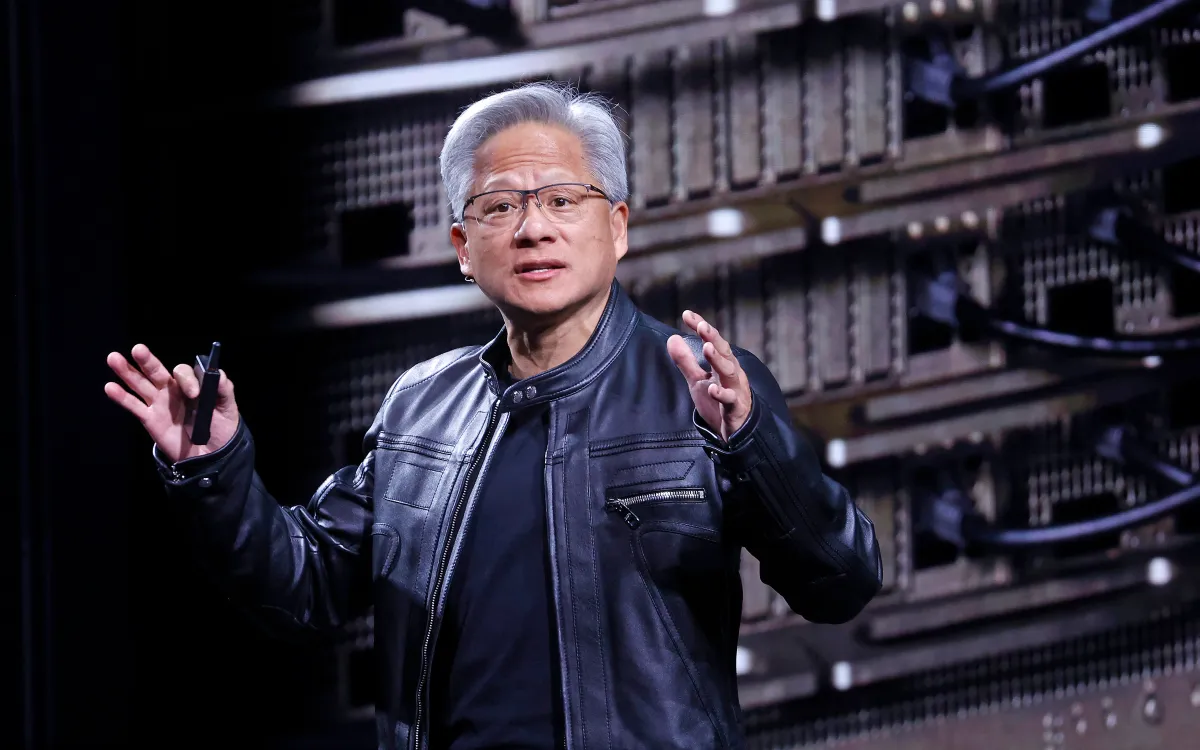
Nvidia founder and CEO Jensen Huang made his position on the dangers AI poses very clear while speaking at Salesforce's Dreamforce conference on Tuesday. To him, AI isn't some new form of "alien mind," as at least one OpenAI safety researcher has described it. It's just hardware and software, he says, built by humans. That means, in his view, it can be controlled by humans and existing laws. "Safety is an engineering problem, not a legal one," he said. "We're developing software after all. We're developing computing systems after all. It's a complicated computing system, but it's ultimately a computing system.
" Therefore, there's no need for new laws or regulations to govern it, he argues. In fact, Huang sees little need for new laws at all. The free market, he argues, will be enough to pressure companies not to release unsafe products. "If we're not confident about the safety of the products, like all companies, like you and I, all the companies here, if you build a product or a service, and you're not confident in its functionality, capability, or safety, then don't release it. And so that's a very obvious thing to do," he said.
He continued: "You pace yourself until you are confident you're releasing something that the market would appreciate. The market forces are already there. We don't need any new laws. We don't need new regulations. We just need companies to decide that when [to] run as fast as they can. I think innovation, speed, and safe products … it's a false choice. You could definitely have both at the same time. So run as fast as you can. But if you feel at any given point in time the company's out of control, or the product's not going to be safe, you know, take a pause and make sure you get it right.
" In some ways, this is a comforting thought. If anyone in the world knows AI, it is Nvidia's founder, who's been building the hardware brains of AI since well before ChatGPT existed and now runs a company that also makes open source models, agents, harnesses, and sandboxes. Then again, if we're being cynical, his point of view is also unsurprising for someone who's had his bread so well buttered by the AI boom . Why would he want regulation to come along and add in a layer of hinderance that could slow down Nvidia's quest to sell ever more AI systems and software?