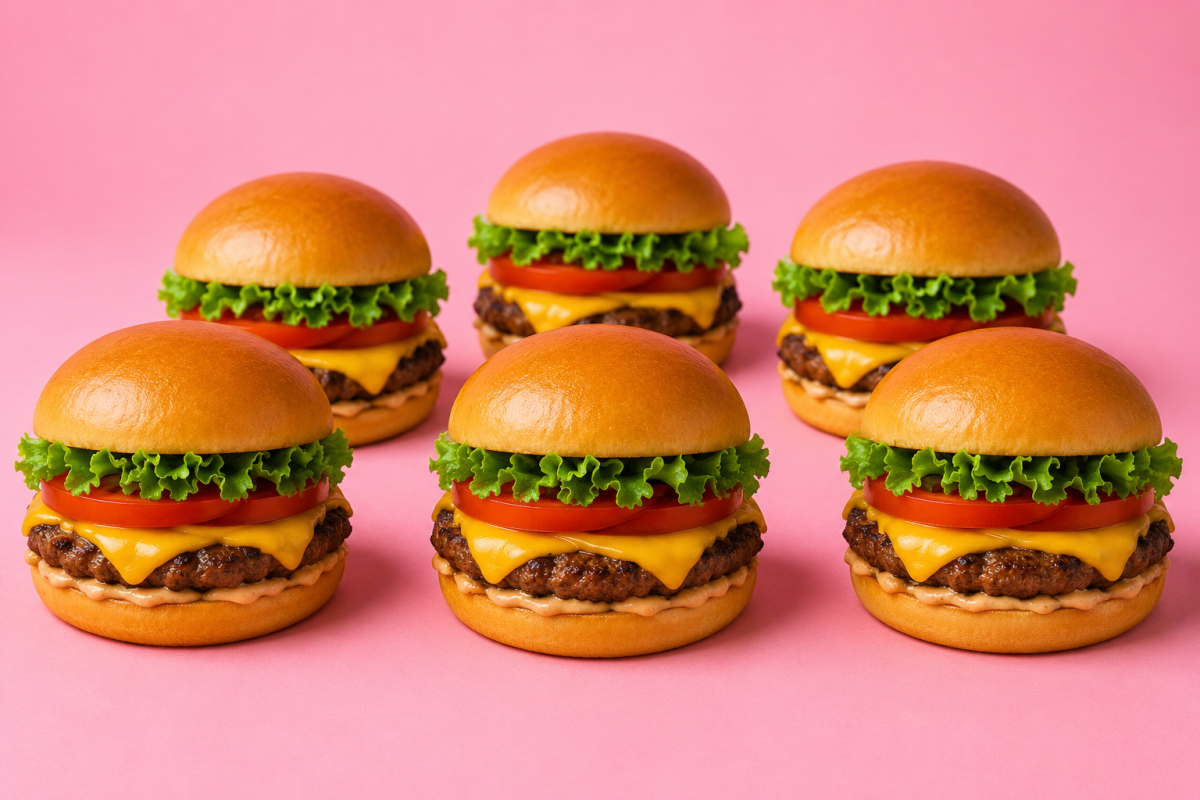
When it first happens to you, you think you're crazy. You wander into a cafe and look at a menu with a variety of bagel sandwiches, but each illustration looks eerily flawless, precisely symmetrical, and oddly smooth, eliciting a visceral sensation that something isn't right. You might think you're paranoid, but you're not losing your mind. Generative AI menus have hit the restaurant business courtesy of models trained on a narrow, "pleasing" aesthetic that feels wrong even when you can't articulate why.
Sometimes, these illustrations are egregiously fake, like a burrito with cheese so bubbly and melty that it looks more like avant garde art than lunch. More often, they're so ordinary looking that you only notice something is wrong when you take a second to look more closely. "It's almost like an alien trying to make a pizza without understanding its core principles," Reality Defender CTO Alex Lisle told TechCrunch. (Reality Defender itself is part of a growing category of startups selling AI-detection and content-verification tools — a business that exists in part because of issues like this one.
) Throw a rock in NYC and you’ll hit a mildly off putting AI food