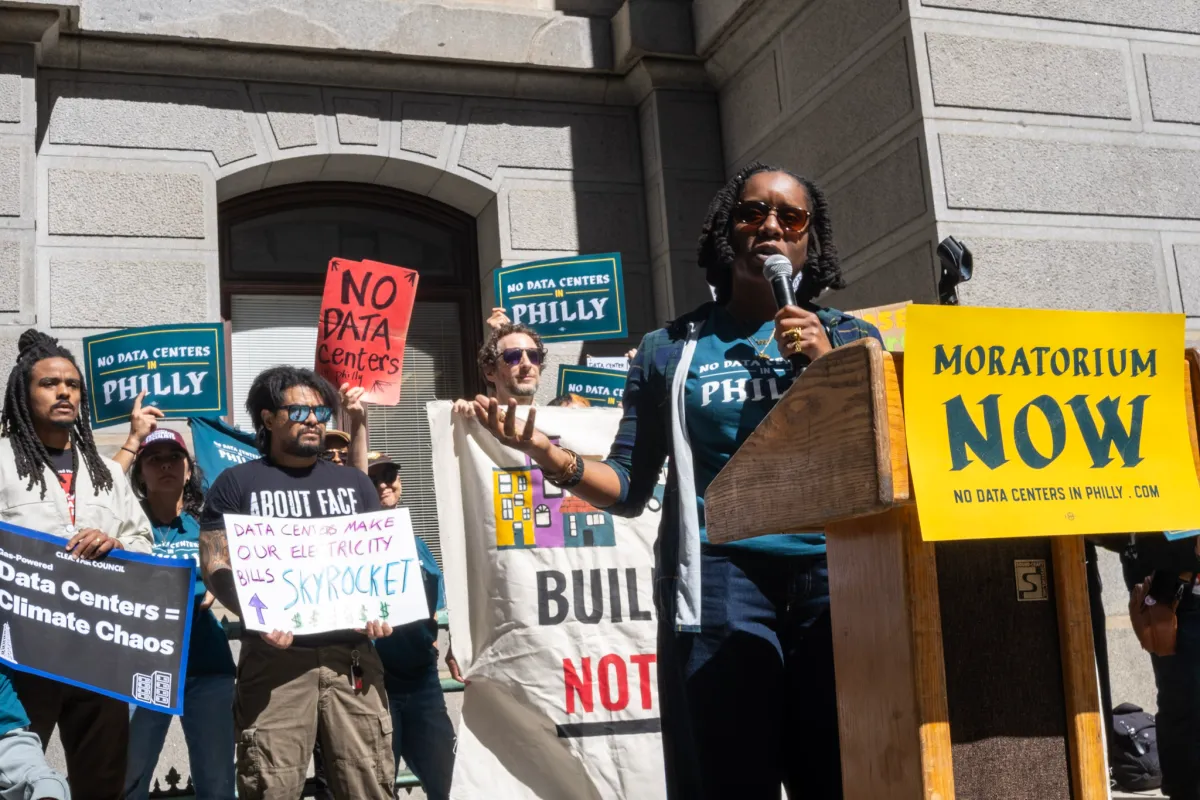
Across the country, Americans are debating how their lives might change if new AI data centers are built in their backyards. Data center companies and their customers are promising new jobs and economic growth, but that pitch hasn't won over a majority of Americans who oppose data center construction in their area, often over environmental and energy concerns. For activist Shawmar Pitts, these concerns aren’t theoretical. He knows better than anyone what it’s like to live in the shadow of American industrialization.
A lifelong resident of the Grays Ferry neighborhood in Southwest Philadelphia, Pitts grew up next to what was then the East Coast’s largest oil refinery , which shut down after an explosion in 2019. Though many of his friends and family suffered from chronic health conditions, he didn’t realize what might have caused these illnesses until he encountered the environmental justice group Philly Thrive , which was tabling in his neighborhood in 2018 about a proposed oil refinery expansion.
“I read the information they had on the table about how living near the refinery affects you, and I’m looking at all the sicknesses on this paper, and I’m like, ‘My mother has this, my sister has that, my next-door neighbor suffers from this’ – every house, someone has something on that list,” Pitts told TechCrunch. “From that point, I was all the way in. ” Pitts, who is now the managing co-director of that same organization, is among those leading the charge for a data center moratorium in Philadelphia.
While there have been no formal proposals for construction yet, city officials have identified two potential sites : one in Northeast Philadelphia and the other in Pitts’ Grays Ferry neighborhood. Data center opposition from local residents isn't unique to Philadelphia. Residents across the United States have pushed back against new data center construction, particularly those living in cities and towns with finite resources. But the pushback has been particularly swift from people living in communities where big industry's mark is still felt.