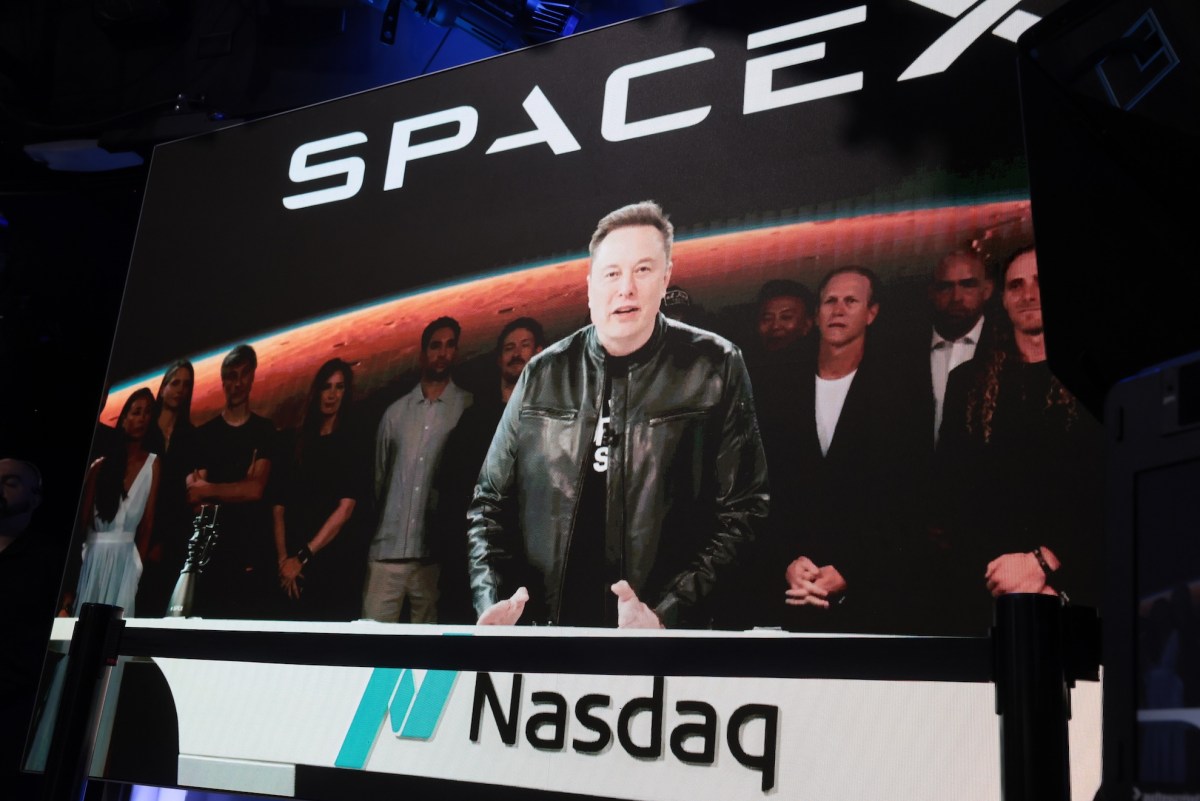
SpaceX's data centers and Grok agents have been more profitable than investors expected in second quarter of the year, as the company leaves its roots as a space company behind to focus on artificial intelligence, which now makes up 52% of its income. Elon Musk's deep tech conglomerate reported on Tuesday $14. 6 billion in third-quarter revenue, according to its regulatory filing . That number was driven by growth in all segments, but especially it's renamed "Super Intelligence" business line, which generated $7.
5 billion the revenue from the recently-acquired Cursor coding tool, Grok bot, and most importantly, the company's burgeoning neocloud business, which now boasts 1. The AI business generated $431 million in profit, which would have been higher absent $1. 2 billion in one-time stock-based compensation expenses related to that Cursor acquisition. The top-line revenue number was also boosted by about $1 billion in income related to the recovery of bitcoin prices and an unspecified related-party income that might be attributed to a SpaceX investment in another company.
The growing revenue is balanced against total capital expenditures of $19. 6 billion, as SpaceX continues to build out a second data center project, Colossus II, and increase investment in Starship, the heavy lift rocket it sees as vital to deploying a new generation of Starlink satellites and developing orbital data centers. During a discussion of the results, Musk said he was spending four days a week in Memphis, TN, the site of Colossus II, working to bring the data center online.
"People are starting to realize [that] the constraint on deployment of of super intelligence is more in power and cooling and infrastructure than it is in chips," Musk argued, saying that he had tasked a team of SpaceX engineers to solve that problem. "This is a bit like the New York Yankees playing in Little League. It's not fair, but the net result is being able to deploy power cooling infrastructure at a rate that is vastly faster than any anyone else.