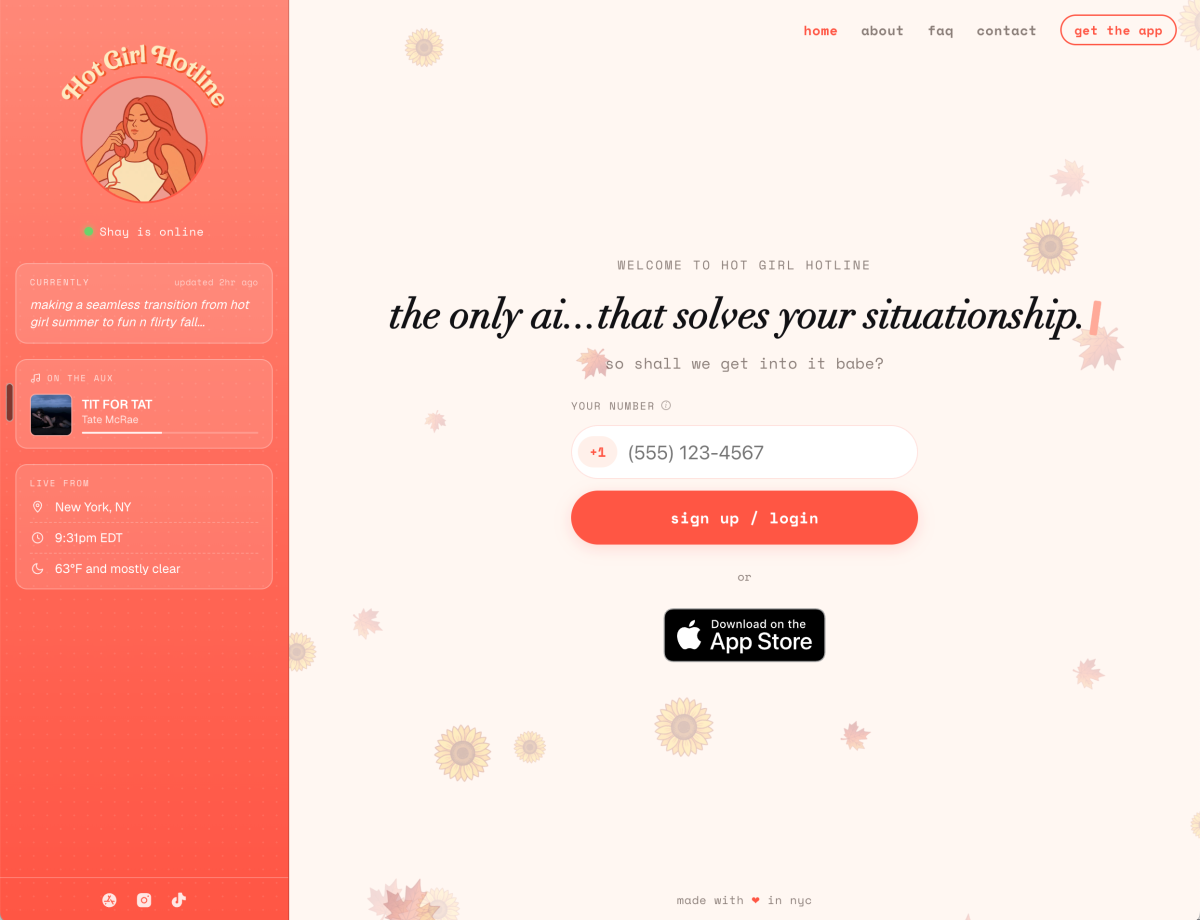
Women throughout history have always sought out relationship advice, whether from newspaper columnists like "Dear Abby," letters to Cosmo, or just chatting with girlfriends. In the social media era, you can instead post anonymously on Reddit relationship forums or look to social media creators who discuss the topic. Now, two sisters are launching a startup for young women, Hot Girl Hotline , which focuses on bringing AI into these conversation. I know what you may be thinking: With all the advances in AI technology, founders are building something for women to talk about their dating woes?
The reality is that people have already been turning to large language models (LLMs) via apps like ChatGPT for this type of advice, and the team believes this type of activity should be handled more carefully. Unfortunately, as we've seen, chatting with a general-purpose chatbot about personal topics can sometimes lead to disastrous effects - especially for those who were already mentally fragile. ChatGPT, for example, has faced a wave of lawsuits over its alleged manipulative conversation tactics that plaintiffs say contributed to negative mental health effects, and, in some cases, suicide.
The idea behind Hot Girl Hotline is to reach young women who are looking to have these sorts of private conversations while navigating dating life and relationships, but in a safer way. "We're not trying to be an AI companion," explained Balia Mudgil , formerly a social media consultant, who co-founded the startup with her sister Sumrin ("Sumi"), who studied computer science at Stanford. "A companion is really going after solving loneliness, escapism, boredom - and you can rely on a lot of emotional dependency from that AI companion.
" Balia says the startup's approach is to focus on offering quality advice grounded in behavioral science, but in a way that makes it feel like you're chatting with a trusted friend or big sister. The conversation is often Socratic, with the AI asking you questions to help you arrive at the answer yourself. "This is not to replace speaking to a human. This is not clinical advice, and we have a lot of safeguards in place…we take safety really seriously," Baila said. If conversations raise flags, for instance, the user is referred to resources such as the crisis hotline 988.