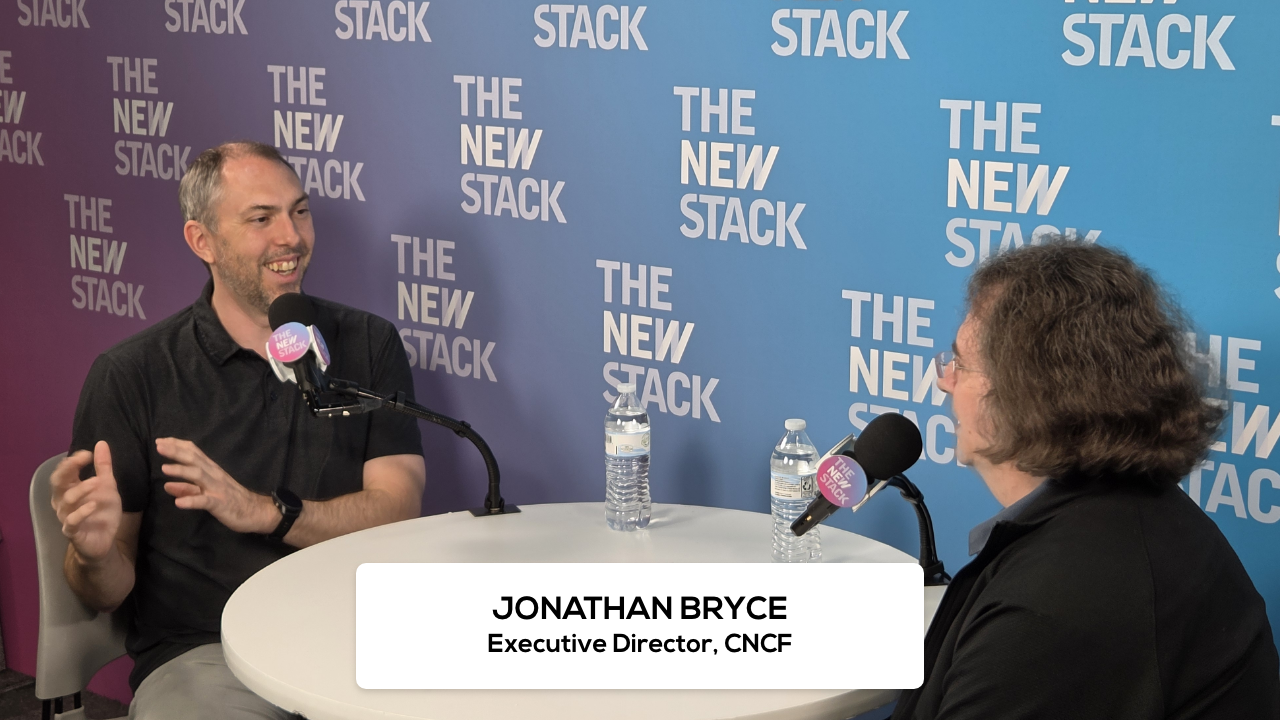
Check your inbox for a confirmation email where you can adjust your preferences and even join additional groups. AI agents are testing systems that were originally built for people, and Jonathan Bryce thinks the cloud-native community has a lot of work to do to help those systems keep up in this new era. The New Stack sat down with Bryce, the executive director of the Cloud Native Computing Foundation (CNCF), at KubeCon + CloudNativeCon North America in Salt Lake City to talk about the projects joining the foundation and how AI is changing its work.
Bryce tells The New Stack , "A lot of the existing systems in our world were built for human speed, and agent speed is a completely different type of usage pattern and scenario, and so these systems are just not scalable and resilient enough to handle the kind of workloads that agents are generating. " Running training and inference workloads on Kubernetes is already a familiar job for this community, and Bryce argues that the financial services, healthcare, and transportation systems that agents interact with will also need the elasticity and observability that cloud-native technologies provide.
At KubeCon, Nvidia announced that it was contributing OpenShell to the CNCF . Google had also announced the donation of Agent Substrate ahead of the show. Both joined the CNCF as Sandbox projects, the foundation's entry-level tier. At its core, OpenShell enforces policies, including which files, networks, credentials, and model endpoints an agent can access. Agent Substrate tackles a related but different issue by providing isolated environments for agents on Kubernetes, with features like support for suspending idle sessions and resuming them when needed.
"We can make AI systems that have security and control architected into them from the infrastructure side," Bryce says. He sees this as a responsibility for the community, given the questions AI has raised about security and resource consumption. Moving a project like OpenShell into neutral governance also lets more companies contribute to it, he says. Agent workloads also aren't as evenly distributed as those of more traditional enterprise applications. "Your agent, even if it's always waiting around to be at your beck and call, it's not necessarily doing work 24/7," Bryce says.