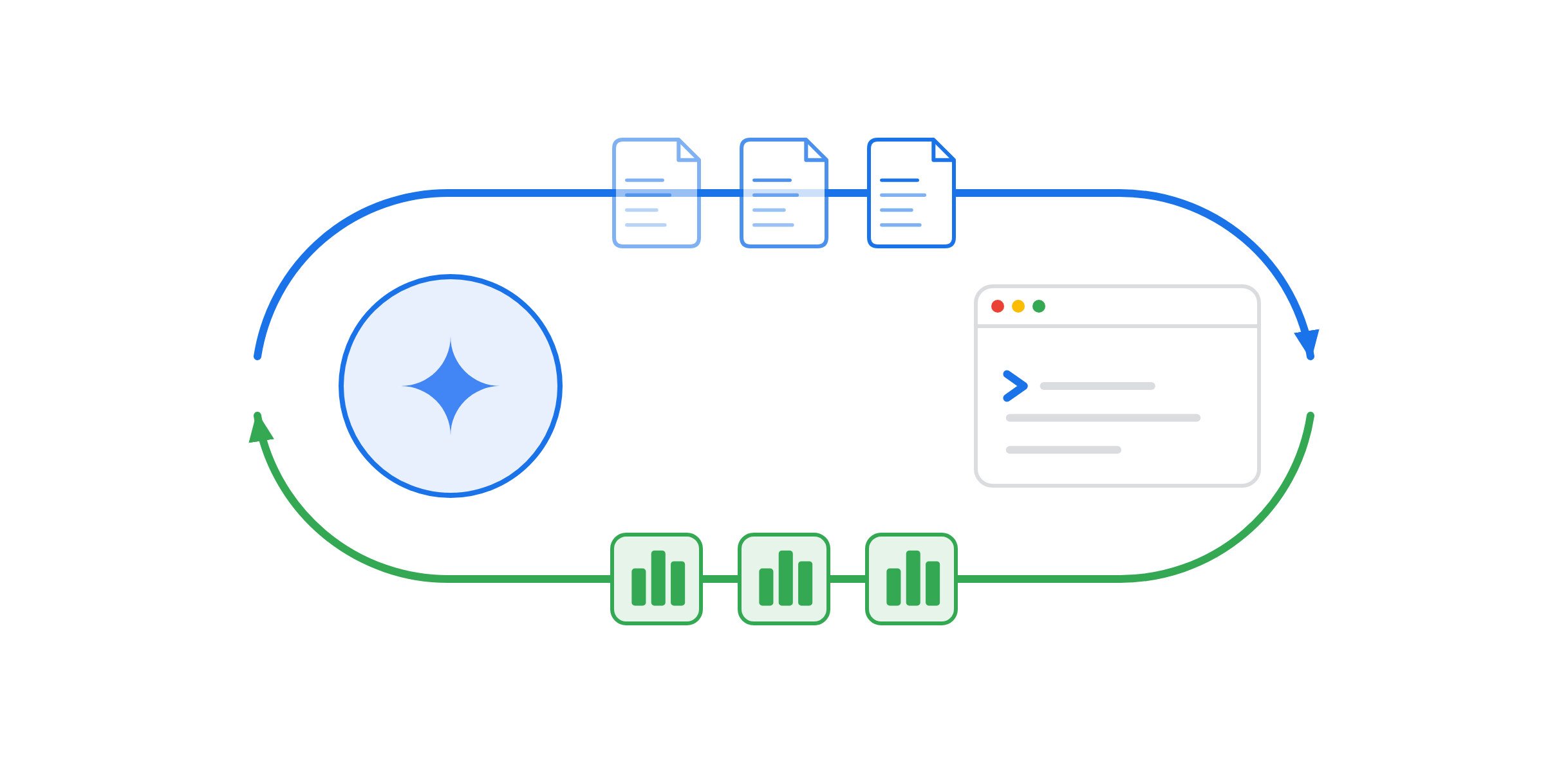
Every day, more and more people are using coding agents like Google Antigravity and OpenCode to complete software engineering tasks. But those tools need instructions to operate and their output is only as good as the inputs they get. By utilizing agent skills that direct the agents through building, testing, and deploying code, developers have a powerful way to automate their workflows. But most skills are written manually, so it’s hard to know which instructions are effective without assessing their output. To measure the effectiveness of our skills, we ran OpenCode with Gemini 3.
8 Flash on tasks from Terminal-Bench 2. The results were inconclusive: with our baseline skill, the agent passed about two-thirds of its attempts, but the outcome was about the same even without the skill. We needed better results. To achieve them, we turned to AlphaEvolve , which optimizes skills the way it optimizes code: Gemini proposes a new version, an evaluator scores it, and the search retains the higher-scoring version. And with Harbor , that evaluator can be a real coding agent working on real tasks.
We saw improvements of 5% with just a few iterations with alphaevolve Treat the skill as the program: AlphaEvolve can rewrite your skill's text. Let the agent judge: Harbor runs the agent with the skill on real tasks. Make the score trustworthy: Compare each version to the baseline skill and run them both at the same time. Check the winner on unseen tasks: Save some tasks the search never sees for your final check. AlphaEvolve is designed to advance the code between two markers in a seed program.
md files with names, descriptions, and markdown instructions, so we put their text between the markers and let Gemini rewrite them: AlphaEvolve operates in Google Cloud and doesn’t run your code. Its feedback is the scores and notes your evaluator sends back about what "better" means. AlphaEvolve proposes a skill, Harbor runs the agent with it next to the baseline skill, and the score and notes go back to AlphaEvolve. Harbor runs agents on benchmark tasks, with each trial in its own container. We ran it on Google Kubernetes Engine (GKE) with one pod per trial, and a single search ran thousands of agent trials.