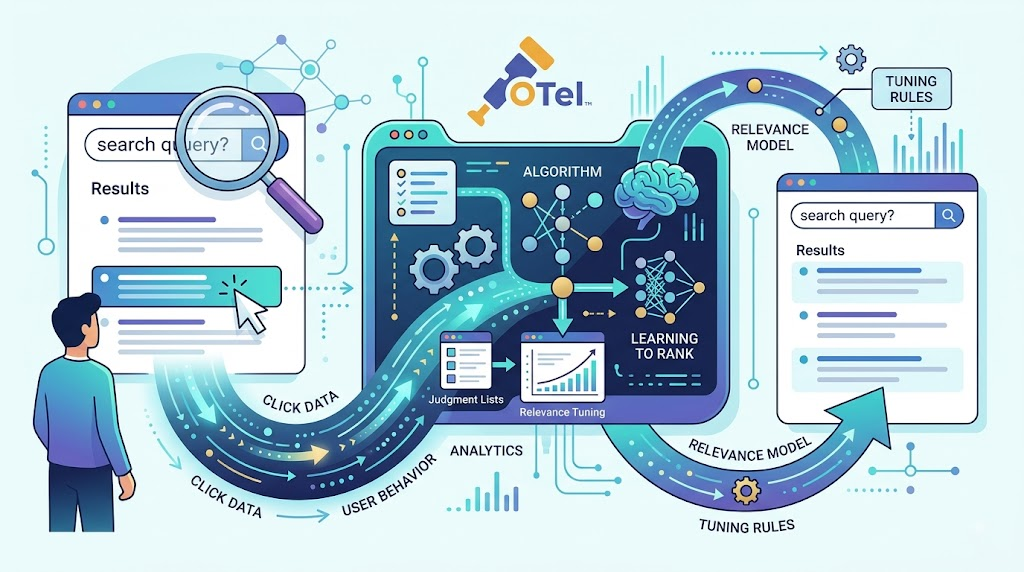
Learn how to turn click streams and behavioral signals from OpenTelemetry search analytics into judgment lists, rank features and Learn To Rank models that make search relevance improve over time. Every click on a search result is an implicit relevance judgment, and conversions are a stronger signal. The search analytics you've been capturing through OpenTelemetry contain the behavioral data to improve search relevance. Techniques start simple, with fixes you can ship this week and build toward Learn To Rank (LTR) models trained on real click data.
The instrumentation that surfaces problems also generates the training data to fix them. Build judgment lists from click data to evaluate and improve relevance. Apply basic search tuning (field weights, boosts, query rules) informed by analytics. Create rank features from behavioral signals, like popularity and conversion rate. Understand LTR and how click data becomes training data. Close the feedback loop between analytics and relevance improvement. Search analytics data from the previous blogs in this series ( search , click , and conversion spans in Elastic).
An Elasticsearch index with product data (the reference project includes sample data with rank features). Familiarity with Elasticsearch queries (BM25 [Elasticsearch's default text scoring algorithm], rank_feature , function scores). Over the past three posts, you built a full instrumentation pipeline, including search spans with search. * attributes and click tracking with position data and click-through rate (CTR) / Mean Reciprocal Rank (MRR) metrics. This pipeline also includes conversion spans tying searches to revenue. And it all sits in traces-generic.
otel-default , queryable with Elasticsearch Query Language (ES|QL). Now you have dashboards, and you know that your CTR is 28%. You also know which queries generate revenue and which ones users abandon. Plus, you can tell your product manager exactly where the funnel leaks. The real value of search analytics is using behavioral data to improve relevance and close feedback loops. It’s also important to make search learn from its users. Your experience tells you that measurement is necessary but not sufficient, and a dashboard that shows poor ranking doesn't improve that ranking.