Posted on October 26, 2026 by Michael Levan | CNCF Ambassador Without these three things, Agents cannot be properly implemented in a controlled environment, they will not have policy enforcement to ensure they do what they’re supposed to do, and there’s zero way of ensuring that the Agent will be readily available when needed. Kagent as the runtime for declarative and BYO (covering frameworks like langgraph/ADK) Agents combined with Agent Substrate for the underlying sandbox environment ensures that you can implement all three production-level needs when running agentic workloads.
In this blog post, you’ll learn the key concepts to agent sandboxing, how Substrate is used, and implementing it with kagent. To follow along with this blog post in a hands-on fashion, you will need: If you do not have a k8s cluster, you can follow along from a theoretical perspective for the learnings until you have a cluster readily available. If you spin up Docker or whatever containerization engine you prefer, create a container, and run a workload in it, technically speaking the workload is “sandboxed”. However, that level of sandboxing might as well not even exist.
Ingress and egress is wide open, the workload can send packets to whatever it likes, and there’s zero policy enforcement. Of course there are ways to tighten this up (network policies, segmentation, routing rules, etc. ), but that doesn’t change the fact that sandboxing as a whole is “flat” by nature. Sandboxing an Agent in a secure and effective fashion means: To ensure that the above can be properly implemented, you need the ability to isolate Agents at both the hardware and software level along with policy enforcement at the AI Gateway for when Agent traffic is reaching its destination.
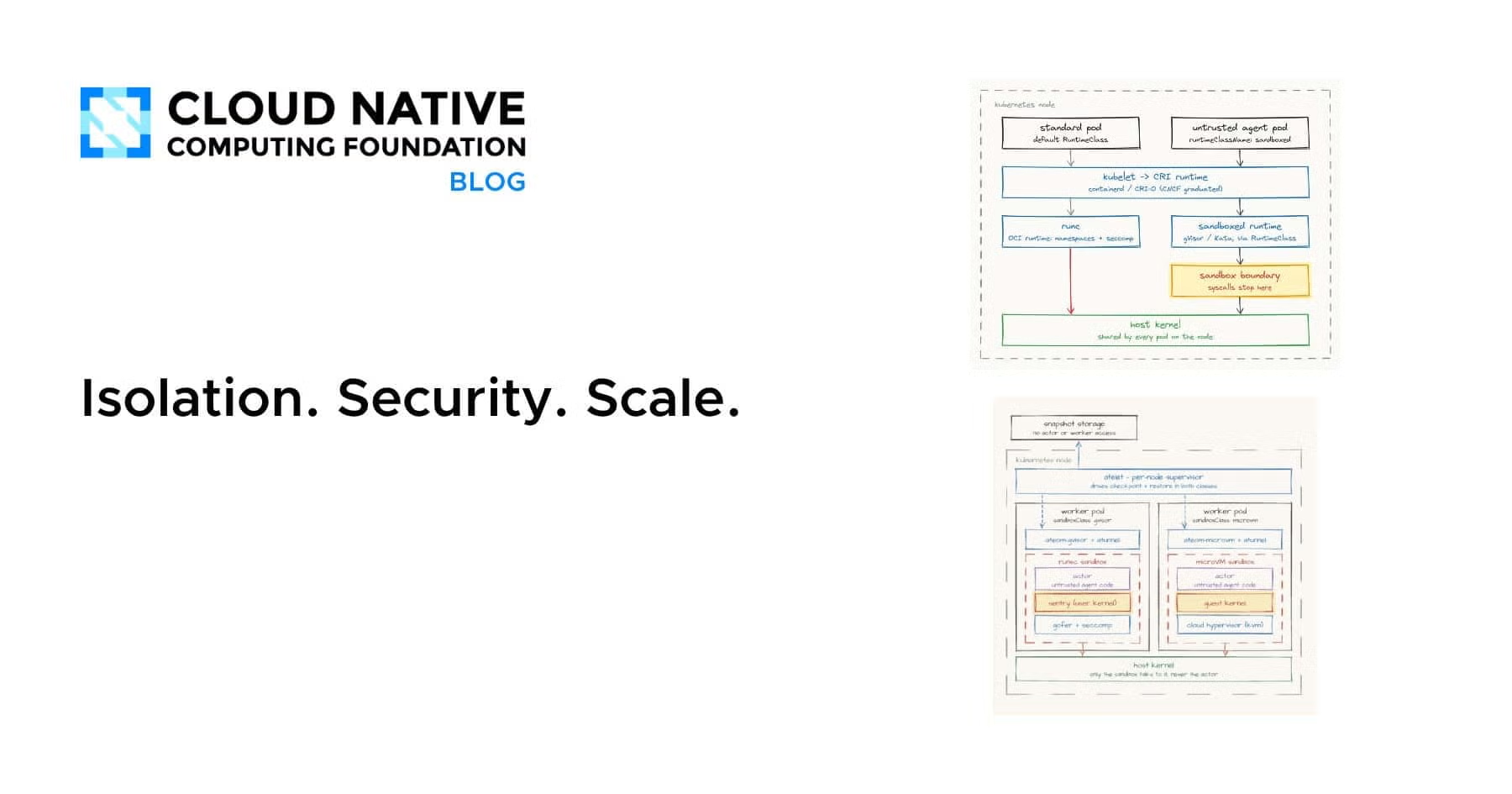
Container isolation (and software-level isolation to that point) stops at your kernel. Everything is running in said kernel (in the user space), which can be sufficient for some, but how that isolation is implemented matters. How the client routes to the Agent and what is in the middle facilitating that routing is what counts when it comes to isolation. With Agent Substrate, all Agents are running in Workers, which are Pods. The Agents are facilitated via Actors, which are managed by the ateapi (Agent Substrate’s Control Plane). Where the isolation comes into play is with software and hardware-level isolation.