Posted on August 18, 2026 by Chamod Perera | CNCF Ambassador and Suvin Kodituwakku, Senior Software Engineer at WSO2 When people talk about cloud sovereignty, the conversation often starts with regions: where a workload runs and where its data is stored. But choosing a region is only part of the story. The architecture of the platform matters just as much, particularly how it separates control, runtime, build, and observability responsibilities across clusters. A recent CNCF community post, " From data residency to digital sovereignty: architectural patterns for cloud native platforms ," made the case well.
Under regimes like the EU Data Act, NIS-2, DORA, and the UK Data Use and Access Act, platform teams now have to show more than where workloads run. They have to show how the platform is operated, secured, and governed, all the way down to the control plane. That article laid out the requirements and introduced the tenant-cluster pattern as one way to draw isolation boundaries. In this article, we look at the same requirements from a different but complementary angle: what happens when you treat sovereignty as a property of a platform's plane topology.
We will use OpenChoreo, an open source internal developer platform and a CNCF Sandbox project, as an inspectable example. The architectural ideas apply broadly, though. The earlier post narrows down the regulatory and procurement noise into four practical properties. Rather than repeat them, we will restate them as the questions an auditor or a procurement team actually asks a platform team: Look at what these questions have in common. Almost none of them are about location. They are about where control and state live, and who can reach them.
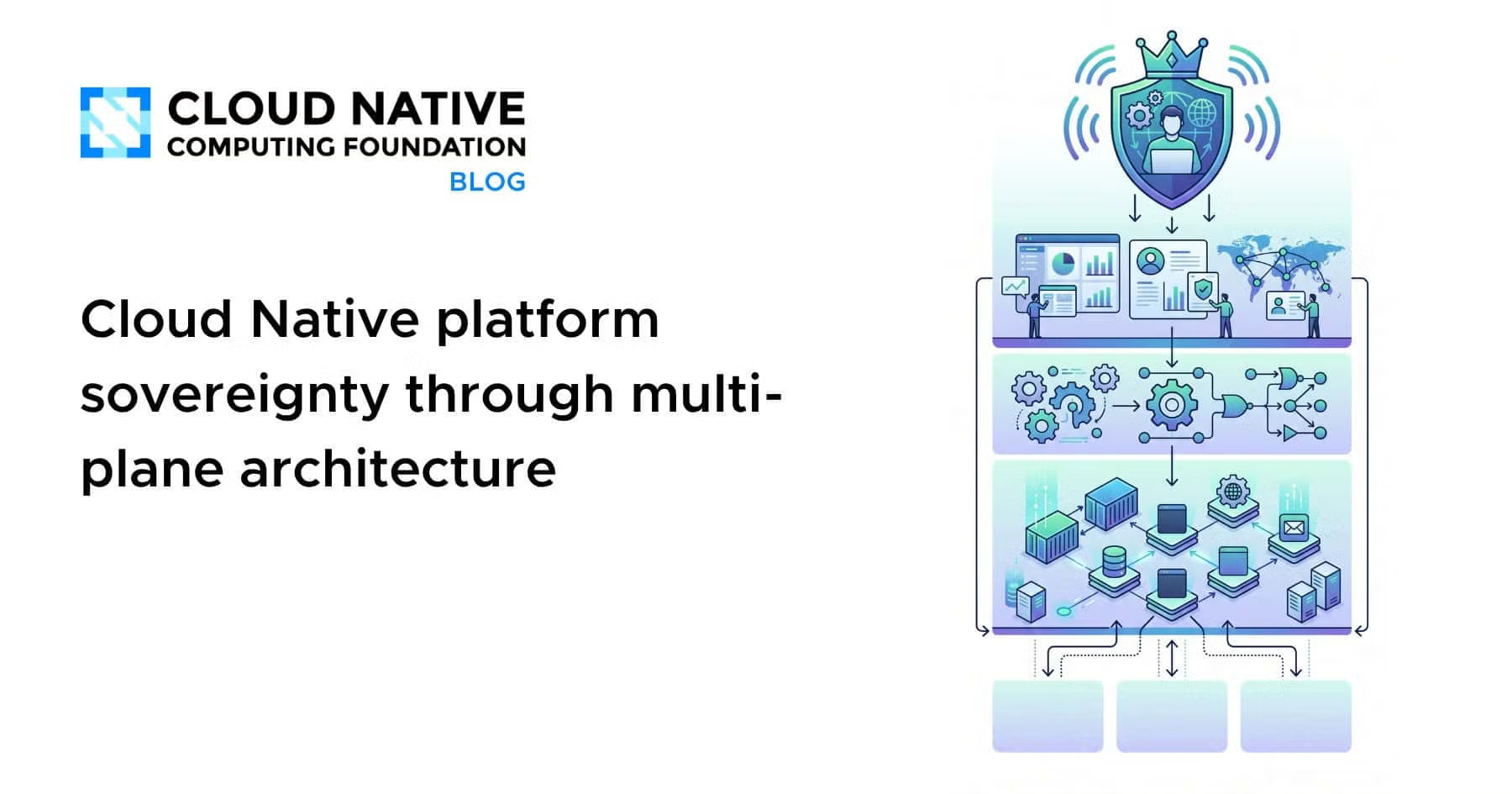
A single shared Kubernetes cluster makes those questions difficult to answer cleanly. One API server, one etcd, one set of controllers and admission webhooks serve every tenant. That makes it hard to point to a clear architectural boundary during an audit.. The tenant-cluster pattern fixes this by giving each boundary its own control plane. A multi-plane platform fixes the same problem one layer up. The two patterns also work well together, as we will see later. OpenChoreo splits the platform into planes.